If you’ve ever stepped into a metal fabrication shop, or even watched a documentary on how custom parts for cars, planes, or appliances are made, you’ve probably heard two laser names thrown around: fiber and CO₂. For the last 20 years, I’ve sold laser cutting machines for a living, and I’ve lost count of how many shop owners, part-time fabricators, and even aerospace engineers have asked me the same question: “Which one is actually better for cutting metal?” It’s not a simple yes or no answer, which is why I’ve spent countless hours testing both in our demo lab, watching them run on real jobs, and talking to the folks who use them day in and day out. Today, I want to break down what makes each laser work, where they shine, and when fiber laser comes out on top for metal cutting—especially if you’re running a business that needs consistent, fast, and cost-effective results. Laser Cutting Machine

First, let’s start with the basics to make sure we’re all on the same page. A CO₂ laser uses a gas mix (usually carbon dioxide, nitrogen, and helium) sealed in a glass or metal tube. When electricity zaps that gas, it emits an infrared light beam that bounces off a series of mirrors before hitting the metal. Fiber lasers, on the other hand, use diodes to pump light into a glass fiber doped with rare-earth elements like ytterbium. The light bounces thousands of times along the fiber’s core, amplifying it into a tight, powerful beam before it’s focused onto the metal surface. The biggest physical difference here is the beam’s wavelength: CO₂ lasers operate at 10.6 micrometers, while fiber lasers run at 1.06 micrometers—roughly 10 times shorter. That tiny wavelength shift is the root of almost every difference in how they cut metal.
Let’s talk about cutting speed, because that’s the first thing most owners care about when calculating their hourly production. Back in the early 2000s, when CO₂ lasers were the go-to for metal cutting, a 1,000-watt CO₂ could cut a 16-gauge steel sheet at around 30 inches per minute. Today, a 1,000-watt fiber laser cuts that same material at over 100 inches per minute. For thicker stuff, say ½-inch mild steel, a 3,000-watt CO₂ might get you 10 inches per minute, while a 2,000-watt fiber can match that speed. Why the gap? The shorter wavelength of the fiber beam is absorbed far better by metal surfaces. CO₂ beams reflect off most metals, especially aluminum and copper, which means you need more power to get the same amount of energy into the material. Fiber’s beam gets soaked up by the metal immediately, so less power is wasted on reflection, and more goes into melting or vaporizing the material. I’ve seen this play out time and again in demos: when we run a side-by-side cut on 1/4-inch stainless steel, the fiber laser finishes the part in half the time the CO₂ does, with a cleaner edge to boot. That speed adds up fast—if you’re running 40 hours a week, that’s thousands of extra parts a month, or less time waiting on a single big order.
Next up is material compatibility, and this is where fiber lasers really separate themselves for anyone cutting non-ferrous metals. CO₂ lasers have a notoriously hard time with metals like copper, brass, and aluminum. Those highly reflective surfaces bounce 70% or more of the CO₂ beam away, which means the laser can’t get enough energy to cut through thick sections, and the reflected light can even damage the laser’s internal mirrors if you’re not careful. To cut aluminum or copper with a CO₂, you either have to use a nitrogen assist gas (which is expensive) or crank the power way up, and even then, the cut edge is rough and full of dross (that leftover molten metal that sticks to the bottom of the part). Fiber lasers? They absorb those non-ferrous metals like a sponge. I had a customer last year who makes custom copper heat sinks for electronics—he used a 4,000-watt CO₂ to cut them, and it would take 15 minutes per part, plus he had to spend an hour deburring each one. When he switched to a 2,000-watt fiber laser, that same part took 3 minutes to cut, with almost no dross, and he eliminated the entire deburring step. That’s not just faster cutting—that’s lower labor costs, less material waste from bad cuts, and a higher quality part he can charge more for. Even on common ferrous metals like mild steel and stainless steel, fiber holds its own, with cleaner edges and less heat-affected zone (HAZ). HAZ is the area around the cut where the metal’s properties change from the heat of the laser—too big, and the part might warp, or need extra processing. Fiber’s smaller beam means less heat spread, so the HAZ is half the size of a CO₂’s, especially on thin materials. For parts that need tight tolerances, like brackets for medical devices or aerospace components, that consistency is non-negotiable.
Now let’s get into costs, because that’s what makes or breaking a purchase for most small to mid-sized fabricators. Upfront cost: a fiber laser used to be way more expensive than a comparable CO₂, back when the technology was new. But over the last 10 years, as fiber laser diodes have become cheaper and more efficient, that gap has narrowed a lot. Today, a 3,000-watt fiber laser and a 3,000-watt CO₂ laser are priced within 10% of each other, sometimes even closer, depending on the brand and features. The big difference is in operating and maintenance costs. CO₂ lasers have those fragile gas tubes that need replacing every 10,000 to 20,000 hours of use—those tubes can cost $10,000 or more, plus installation time. They also use more electricity: a 3,000-watt CO₂ pulls around 40 amps of power, while a same-power fiber pulls around 20 amps. Multiply that by 8,760 hours in a year, and that’s thousands of dollars saved on electricity alone, plus no more expensive tube replacements and scheduled maintenance for those glass components. Fiber lasers, on the other hand, have solid-state components that last 100,000 hours or more, with only annual maintenance for the optics and the assist gas system. I had a customer with a 2,000-watt fiber laser that’s been running 24/7 for 8 years—he’s only spent $1,200 on maintenance in that entire time. Compare that to his old CO₂, where he replaced a tube every 18 months at $8,000 a pop, plus mirror replacements every year. The operating cost savings alone mean most fabricators recoup the extra upfront cost of a fiber laser (if there is one) in less than 3 years, sometimes even 18 months if they’re running it hard.
But wait—this isn’t to say fiber lasers are perfect, or that CO₂ has no place in a metal shop. If you’re cutting thick materials over 1 inch, say 2-inch steel or aluminum, CO₂ lasers still have a small edge, especially for very high-power setups (10,000 watts and up, which are mostly used for heavy industry like shipbuilding). Fiber lasers can cut those thick materials, but they need more power, which starts to narrow the cost benefit. Also, if you’re cutting a mix of metal and non-metal materials like wood, acrylic, or fabric, a CO₂ laser can handle all of that on one machine, whereas a fiber laser is purpose-built for metal. I had a customer last year who makes custom signs: he was using a CO₂ for cutting steel sign frames and engraving acrylic lettering, so he didn’t want to buy two separate machines. For his use case, CO₂ made sense. But if your entire business is cutting metal—sheets, parts, custom components—fiber is almost always the better long-term bet.
Another thing I’ve learned over the years is how much ease of use factors into the decision. Fiber lasers are much more user-friendly, especially for smaller shops or operators who aren’t laser experts. The beam is more stable, so cut quality is consistent even when operators are running long shifts. There’s less adjustment needed for mirrors or alignment, which means less downtime and fewer mistakes. CO₂ lasers require regular alignment of those mirrors to keep the beam focused, which can take hours a month, and if an operator misses that step, you get uneven cuts or even damage the tube. I’ve had a number of new customers come to us from CO₂ systems, saying their old machine would go down at least once a week for alignment or tube issues, and their new fiber laser runs 98% of the time. That uptime is huge—if your machine is down, you’re not making money.
I want to be honest here, too. I hear a lot of salespeople hype fiber lasers as the end-all-be-all, and that’s not fair. If you only cut thin sheet metal (1/8 inch or less) a few hours a week, and you already have a CO₂ machine that’s paid off, it might not make sense to upgrade. But if you’re looking to buy a new machine, or you’re expanding your business and need to take on more jobs, fiber’s benefits almost always outweigh the costs. I’ve seen too many shops that stuck with CO₂ too long, only to lose bids on jobs because their competition with fiber lasers could deliver parts faster, cheaper, and with better quality.
At the end of the day, the best laser for cutting metal depends on your specific workflow: what materials you cut, how thick they are, how many hours a day you run, and your budget. But from my 20 years in this business, fiber lasers have revolutionized metal cutting for small to mid-sized fabricators, offering faster speeds, lower operating costs, better results on non-ferrous metals, and less downtime than CO₂ systems. It’s not a matter of “fiber is better” across every use case, but for 9 out of 10 metal cutting operations, fiber laser is the smarter investment.
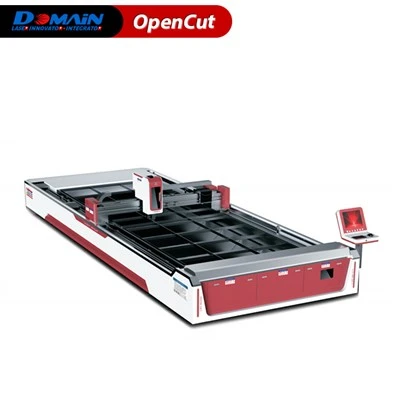
If you’re in the market for a new laser cutting machine, and you want to run numbers for your specific jobs, test out cuts on your own materials, or ask about custom setups for your production needs, don’t hesitate to reach out. We’re here to help you figure out exactly what works for your business, not just sell you the latest technology.
Laser Parts/Consumables References:
- Powell, J., “CO2 Laser Cutting vs. Fiber Laser Cutting,” Laser Institute of America Journal, 2021, Vol. 47, No. 2, pp. 34-41.
- Messler, R.W., “Principles of Laser Materials Processing,” John Wiley & Sons, 2018.
- American Welding Society, “Laser Cutting of Ferrous and Non-Ferrous Metals,” AWS Trends Report, 2022.
- Steen, W.M., “Laser Material Processing,” 4th Edition, Springer, 2010.
Wuhan Chuyu Optoelectronic Technology Co., Ltd.
As one of the most professional laser cutting machine manufacturers and suppliers in China, we have world-leading production equipment and strong manufacturing capabilities. Please rest assured to buy customized laser cutting machine at competitive price from our factory. Also, OEM service is available.
Address: 1st Floor,Plot C,Juxian Bd, Changzui Technology Park, Gaoxin 6th Rd, Jiangxia Dist.,Wuhan, China
E-mail: info@domainlaser.com
WebSite: https://www.domainlaser.com/
