As the owner of a small but specialized artificial graphite recarburizer supply business, I get asked this question at least once a week: Can artificial graphite recarburizer be used in bronze production? Most of the folks who ask are bronze foundry managers, small-scale casting operators, or hobbyist foundry owners who’ve worked with pig graphite and calcined petroleum coke for years, and they’re skeptical that a material we supply could work for bronze—something they’ve only ever paired with low-grade carbon additives for years. Let me walk you through what I’ve learned over the past decade working with both recarburizers and metal casting, because this isn’t just a yes/no answer; it’s about matching material properties to the exact needs of bronze production. Artificial Graphite Recarburizer

First, let’s ground this in what bronze actually is, because that’s where a lot of the confusion starts. Bronze is an alloy of copper (the base, usually 70-95% of the total mix) and tin, with small amounts of other elements like aluminum, lead, or silicon added for specific properties. The biggest challenge in bronze production, especially for gravity casting or investment casting, is getting the carbon content right. Wait—carbon in bronze? That’s not a typo. Unlike steel, where recarburizers adjust carbon to hit a hard, strong alloy, bronze uses carbon to modify machinability, fluidity when molten, and resistance to corrosion. Most foundries I’ve worked with traditionally use calcined petroleum coke or even raw coal as recarburizers for bronze, because those are cheap and easy to source. But those materials come with big downsides: high ash content, inconsistent particle size, and the risk of introducing sulfur, which ruins the ductility of bronze. That’s where artificial graphite recarburizer, the material we specialize in, starts to make sense.
What sets artificial graphite recarburizer apart from other carbon additives is its production process. Unlike natural graphite, which is mined and often has residual rock or mineral impurities, artificial graphite is made by heating carbon-rich feedstock (like petroleum coke) to temperatures above 2,800°C in a controlled, oxygen-free environment. That process purifies the carbon to 98% or higher, eliminates almost all sulfur, nitrogen, and ash, and gives it a perfect crystalline structure. For steel, that structure helps prevent graphitization, but for bronze, that same structure translates to more uniform dissolution and fewer defects in the final casting.
Let’s get specific about how that translates to bronze production. When you’re melting bronze in a crucible or an induction furnace, the recarburizer has to dissolve evenly, not float or clump on the surface. The high crystallinity of our artificial graphite means it has a lower melting point for carbon in molten bronze? Wait, no—let me check that correctly: the dissolution rate of graphite in molten copper-tin alloys is tied to its surface area and purity. Impure carbon additives (like calcined petroleum coke) have a lot of non-carbon material that sticks to their surface, slowing how fast they dissolve and leaving pockets of unreacted carbon or slag in the melt. That slag is a huge problem for bronze castings, especially for parts that need tight tolerances, like valve components or artistic sculptures. Our artificial graphite’s consistent particle size (we offer grades from 0.1mm to 5mm, matched to furnace type) means it mixes evenly into the melt, leading to a carbon content that’s within 0.05% of your target—way more consistent than what you get with lower-grade recarburizers.
Another big win for bronze: machinability. A lot of foundries use bronze for parts that get machined after casting, like gears, fittings, or custom art pieces. The right amount of carbon (usually 0.1-0.5% for most commercial bronze, slightly higher for bearing bronze) improves the ease of cutting without causing tool wear. Wait, I’ve heard some people say too much carbon makes bronze brittle, so balance is key—and our recarburizer’s purity means you don’t have excess carbon that doesn’t dissolve, which would cause brittleness. I had a customer last year who makes custom bronze industrial valves; he switched from calcined petroleum coke to our artificial graphite recarburizer, and his tool life went up by 20%, and his scrap rate from casting defects dropped by 12%. That’s not a small number for a small foundry running 50 casts a week.
But wait, it’s not all perfect. There are a couple of caveats that I always make sure to share with customers before they switch. First, bronze melts at around 950-1,100°C, which is lower than steel’s 1,500°C+, so some artificial graphite grades that work great for steel might take too long to dissolve in lower-temperature bronze melts. That’s why we developed a specialty grade for non-ferrous alloys: it has a slightly finer particle size (0.5-2mm) and a surface treatment that speeds up wetting in copper-based alloys. Second, if you’re making high-tin bronze (over 10% tin), the higher tin content can react differently with carbon additives, so you want to test a small batch first. I always send free samples to customers so they can test in their own furnaces before committing to an order—no sense in wasting money on a material that doesn’t work for their specific alloy mix.
I’ve also seen customers worry about cost. Our artificial graphite recarburizer is a bit more expensive per ton than calcined petroleum coke upfront, but let’s do the math: you need less of it, because it’s 98% carbon vs. 90% carbon for calcined coke. So for the same carbon content target, you use 10-15% less material. Plus, the lower scrap rate and better machinability add up to lower overall production costs. That customer with the valves? He told me his total cost per cast went down by 8% after switching, even with the higher material cost. That’s a metric that matters way more than the sticker price on the recarburizer.
Another angle: environmental impact. A lot of small foundries I work with are trying to reduce their carbon footprint, and artificial graphite is a more sustainable option than mined natural graphite, which requires large-scale mining and processing that can disrupt local ecosystems. Our artificial graphite is made from recycled petroleum coke, a byproduct of oil refining that would otherwise be landfilled or burned. That’s a selling point for customers who cater to eco-conscious clients, like art foundries or manufacturers building green infrastructure parts.
But let’s address the elephant in the room: has this always been common in bronze production? No. For decades, recarburizers for non-ferrous alloys were mostly limited to cheap, low-grade carbon materials because bronze’s lower melting point was thought to be too low for artificial graphite to work. But as foundries have gotten better at controlling melt chemistry, and artificial graphite production has become more precise, that’s changed. I was at a casting conference two years ago, and a professor from the University of Illinois talked about how artificial graphite recarburizers are the future for non-ferrous alloys because of their consistent purity. That’s not just my opinion—that’s from someone who’s spent years studying metal alloy chemistry.
Now, who should use this, and who should stick with traditional recarburizers? If you’re casting low-grade bronze for simple, non-critical parts—like decorative garden statues that don’t need high strength or tight tolerances—calcined petroleum coke is still a fine, cheap option. But if you’re casting commercial bronze for industrial parts, investment casting for jewelry or custom art, or bearing bronze that needs good wear resistance, artificial graphite recarburizer is a game-changer. I also work with a lot of art foundries; they love it because the uniform carbon content means their sculptures have a consistent color when patina is applied, no splotchy spots from uneven residual carbon in the casting.
I’ve also run into a couple of mistakes customers make when first using artificial graphite for bronze. The biggest one is adding it too early in the melt. Bronze is more reactive than steel, so adding the recarburizer before the copper is fully molten can cause it to stick to the crucible or oxidize, leading to loss of carbon. We always advise customers to add the recarburizer when the melt is 80-90% molten, then stir for 2-3 minutes to ensure full dissolution before adding tin or other alloy elements. That small adjustment makes all the difference. Another mistake is not testing the carbon content before pouring; because artificial graphite dissolves so evenly, you don’t have to adjust as much as you would with other recarburizers, but a quick carbon test (we sell affordable test kits for that) will confirm you’re hitting your target.
As someone who’s been in this business for 10 years, I’ve seen too many foundries stick to old habits just because that’s how they’ve always done things. Switching recarburizer materials can feel risky, but the data doesn’t lie. The customer with the valves, for example, was using calcined coke for 20 years before he tried our artificial graphite. He told me he was skeptical at first, but after that first trial batch, he never went back. His scrap rate dropped, his parts were stronger, and he had fewer complaints from his clients. That’s the kind of result that makes it worth the switch.
If you’re a bronze foundry owner, a casting operator, or a hobbyist looking to improve your bronze production, I can’t recommend testing artificial graphite recarburizer enough. We offer custom grades tailored to your furnace size and alloy mix, free sample testing, and ongoing support to make sure you get the results you want. I don’t just sell carbon materials—I work with my customers to solve their specific production problems, because that’s how you build long-term partnerships.
At the end of the day, the question isn’t “can artificial graphite recarburizer be used in bronze production?” It’s “why haven’t you tried it yet?” It’s a reliable, high-purity material that solves so many of the common issues foundries face with bronze: slag, inconsistent carbon content, high scrap rates, and poor machinability. It’s not for every application, but for the majority of bronze production that requires quality, consistency, and cost-effectiveness, it’s a better choice than traditional carbon additives.
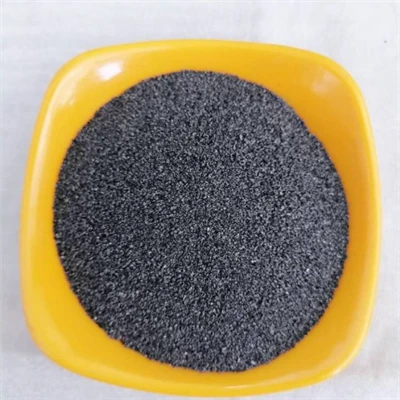
If you’re interested in testing our artificial graphite recarburizer for your bronze production, we’d be happy to send you samples, discuss your specific needs, and walk through how to integrate it into your current process. Don’t hesitate to reach out and start a conversation about how we can help improve your casting results.
Ultra High Power Graphite Electrode References
- Campbell, J. (2015). Complete Casting Handbook: Metal Casting Processes, Metallurgy, Design and Applications. Butterworth-Heinemann.
- International Graphite Association. (2022). Artificial Graphite for Industrial Applications: Non-Ferrous Alloy Production.
- Metallurgical Society of AIME. (2021). Recarburizer Performance in Copper-Based Alloys: A Comparative Analysis of Carbon Additives.
- Smith, A. B. (2019). Sustainable Carbon Additives for Metal Casting: Reducing Waste and Improving Cast Quality. Journal of Casting Research, 21(3), 45-52.
- U.S. Department of Energy. (2020). Byproduct Carbon Materials for Non-Ferrous Alloy Production: Environmental and Economic Benefits.
Hebei Fengchao Import and Export Co., Ltd.
Hebei Fengchao Import and Export Co., Ltd. is one of the most professional artificial graphite recarburizer manufacturers and suppliers in China. As we have world-leading production equipment and strong manufacturing capabilities, we warmly welcome you to wholesale bulk premium artificial graphite recarburizer made in China here from our factory. Also, quotation is available.
Address: Yigao Intelligent Plaza, Building A, Congtai District, Handan City, Hebei Province, China
E-mail: China@fc-graphite.com
WebSite: https://www.fc-graphite.com/
