If you’ve ever sipped from a water bottle, a soda can, or even a jar of peanut butter, you’ve interacted with a PET preform—the small, test-tube-shaped piece of plastic that gets blown into the final container. As someone who’s spent 12 years designing and building PET preform molds for a living, I’ve heard every kind of horror story from clients: preforms that crack during blowing, have inconsistent wall thickness, or warp so bad they can’t even load into the bottle machine. And more often than not, when we dig into the root cause, one variable keeps popping up as the unsung hero (or villain) of preform quality: injection time. PET Preform Mold
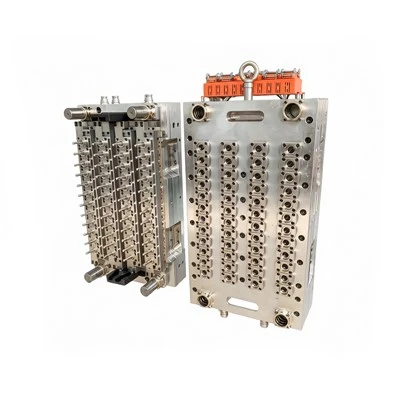
I know, I know—when you’re cranking out thousands of preforms an hour, you don’t spend a lot of time dissecting what happens in the 1 to 3 seconds it takes for molten PET to fill a mold cavity. Injection time is usually lumped in with “cycle time,” a buzzword that operators and production managers fixate on to keep lines running fast. But after working with hundreds of production facilities, from small local bottlers to large multinational beverage brands, I can tell you this: messing with that tiny window of injection time will tank your preform quality faster than any other setting in the mold. Today, I want to break down why that’s true, share the lessons I’ve learned fixing mold issues for clients, and explain how getting injection time right doesn’t just make better preforms—it saves you money in the long run.
First, let’s get on the same page about what injection time actually is, because there’s a lot of misinformation out there. When a PET preform mold runs, the process goes like this: molten PET resin (heated to around 280°C, for context) is forced through the mold’s gate—the tiny opening at the bottom of the preform’s threaded neck—into the cooled steel cavity. The time it takes for that cavity to go from empty to 100% full is your injection time. For most standard 28mm neck preforms, that number is between 0.8 and 2.5 seconds, depending on the preform’s size, wall thickness, and even the resin grade you’re using.
Now, why does this split-second matter so much? It all comes down to how PET behaves when it’s moving. PET is a semi-crystalline thermoplastic, meaning it has a mix of ordered and disordered molecular structures. When molten PET is under pressure, especially as it flows into a tight mold cavity, those molecules align—this is called shear-induced orientation. If injection time is too slow, what happens to that alignment? Let’s say you take 4 seconds to fill a cavity that should take 1.5. The molten PET is moving slowly, so by the time it reaches the far end of the preform (the tip), the resin that entered first starts to cool down. PET’s melt temperature drops quickly when it hits the mold steel, so slow injection means the leading edge of the flow solidifies before the cavity is full. That leads to all kinds of problems: short shots, for one, but also inconsistent wall thickness. The thin sections cool faster, so they don’t fill as much as the thicker ones, leaving you with preforms that blow unevenly—some areas will stretch too thin during blowing, causing pinholes, while other areas are too thick, wasting resin.
I remember a client in Ohio who runs a line for a regional iced tea brand. They were having a nightmare with preform tips breaking during the blowing process—up to 2% of preforms were getting rejected before they even made it to the blow mold. When we tested their injection time, it was 3.8 seconds. That’s almost double what it should be for their 38g preform. We adjusted it to 1.8 seconds, and the breakage dropped to 0.1% within an hour. The difference? Faster injection meant the molten PET filled the entire cavity before any part of the flow cooled. The tip was fully formed, with uniform molecular structure, so it stretched evenly when blown. The client told me later that saved them $12,000 a month in rejected preforms. That’s the kind of impact we’re talking about here.
But wait—what if injection time is too fast? Is that a good thing? No, and that’s another common mistake. Some production teams think, “Faster injection = shorter cycle time = more parts per hour,” so they crank the injection speed up as high as it will go. But if you shoot the molten PET into the cavity too quickly, you get something called flow front turbulence. Imagine turning on a garden hose and holding your thumb over the end—you get a fast, narrow jet that hits the other end of the hose and splashes. That’s exactly what happens in a preform mold. The high-speed flow of PET doesn’t spread smoothly through the cavity; it hits the tip of the preform, bounces back, and creates a messy, uneven flow front. This causes what’s called “jetting”—when the resin folds over itself as it fills, leaving air pockets, voids, or thin spots in the final preform.
I had a client in Mexico that makes preforms for a large water bottler. They were running 50,000 preforms an hour, which was way above the average for that size of mold. But 3% of their preforms had internal voids, and when they blew them into bottles, the bottles would leak at the base. When we tested their injection time, it was 0.5 seconds—way too fast for their 50g preform. We slowed it down to 1.7 seconds, and the voids disappeared. The flow front was smooth, so there was no air trapped between layers of resin. The bottles now passed all their pressure and leak tests. The client initially pushed back, worried about losing production speed, but when we recalculated their overall reject rate, they realized that even a small dip in hourly output was offset by the savings from not having to scrap bad parts and rework lines.
Another key factor that ties injection time to preform quality is molecular orientation, and this is where a lot of new mold operators get confused. The threaded neck of the preform is a critical part—all bottles thread onto it, so it needs to be rigid, free of stress cracks, and consistent. The neck area is the first part of the preform to fill, right at the gate. If injection time is too slow, the PET at the neck has time to cool and solidify before the pressure from the melt is fully applied. That leaves the neck with low molecular orientation, which makes it prone to cracking when the cap is twisted on or off. I’ve seen clients with this exact problem—they’d get a batch of preforms where 1% of the necks cracked during cap tightening, and they couldn’t figure out why. Turned out their injection time was 3.5 seconds. Cranking it down to 2 seconds meant the neck filled quickly, under consistent pressure, so the molecules aligned properly, making the neck far more durable.
Conversely, if injection time is too fast, the shear stress at the gate is too high, which can cause molecular degradation in the neck area. Degraded PET is brittle, so even if the neck looks fine, it will crack over time, especially when exposed to extreme temperatures (like a truck sitting in the sun for weeks). That’s a hidden quality issue—you might not see the problem until the bottles are on store shelves, which is way more expensive to fix than scrap at production.
So what’s the sweet spot for injection time? It’s not a one-size-fits-all number, which is why as a mold supplier, we never just give clients a generic setting and send them on their way. The ideal injection time depends on four main factors: preform size and wall thickness, mold design (number of cavities, gate size, cooling system), resin grade, and production speed. For example, a small 20g preform for a 200ml soda bottle will have an ideal injection time of around 1 second, while a large 100g preform for a 5L water jug might be closer to 2.5 seconds. If your mold has 48 cavities instead of 12, you’ll need a slightly faster injection time to make sure all cavities fill evenly at the same time—if one cavity fills slower than the others, you get inconsistent quality across the mold.
That’s another point I can’t stress enough: injection time affects cavity-to-cavity consistency. In multi-cavity molds, every millisecond of injection time difference between cavities will lead to different preform quality. We design our molds with balanced flow systems to ensure resin reaches each cavity at exactly the same rate, but injection time is the variable that makes that balance work. If you set the overall injection time too slow, the outer cavities of the mold will fill before the inner ones, leading to uneven wall thickness. If it’s too fast, you get turbulence in the outer cavities, as the resin has less time to spread evenly.
I’ve also learned that the best way to nail down the right injection time is to run small tests on your mold before you crank up full production. Too many production teams just set the injection time based on a default from the machine, not from testing their specific mold, resin, and preform. When we work with a new client, we always recommend a trial run: start with an injection time of 1.5 seconds, adjust it by 0.1 second increments, and check each batch of preforms for short shots, wall thickness consistency, neck rigidity, and tip quality. It takes a few hours, but it’s worth it—we’ve had clients come back and tell us that adjusting injection time fixed their quality issues immediately, no other changes needed.
One common myth I still hear is that faster injection time is always better for cycle time. While it’s true that faster injection can add a few seconds to your cycle, the cost of bad preforms far outweighs the gain in speed. Let’s do the math: a client running a line that produces 1 million preforms a month with a 2% reject rate from poor injection time is wasting 20,000 preforms. At a cost of $0.05 per preform, that’s $1,000 a month in waste. Even if adjusting injection time slows down production by 5%, that would mean producing 950,000 preforms in the same time—930,000 good ones, which is almost double the good parts from the original setup. The extra 50,000 good preforms at $0.05 each is $2,500 in savings, way more than the small loss from slower speed.
Of course, injection time isn’t the only factor affecting preform quality—cooling time, mold temperature, and pressure all play a role. But it’s the one variable that’s most often overlooked, because it happens so fast, operators don’t see the impact in real time. As a mold supplier, we spend a lot of time educating our clients on these basic process variables, because we know that even the best mold won’t produce high-quality preforms if the process settings are wrong.

If you’re struggling with preform quality issues—cracks, voids, uneven wall thickness, high reject rates—I’d be happy to walk you through how injection time might be the root cause. We’ve helped hundreds of clients diagnose and fix these exact problems, and we can work with you to test your specific setup, adjust your injection time, and get your preform quality where it needs to be. Don’t let a split-second variable derail your production and eat into your profits—reach out to us to discuss your preform mold needs today.
PET Preform Mold References
- Rosato, D. V., & Rosato, M. G. (2004). Injection Molding Handbook. Kluwer Academic Publishers.
- Zachariades, A., & Porter, R. S. (1997). Handbook of Thermoplastics. CRC Press.
- International Society of Plastics Engineers (SPE). (2018). PET Preform Processing Guidelines. SPE Thermoforming Division.
- Campbell, G. A. (2000). Injection Molding of Thermoplastics: Process, Technology, and Practice. Hanser Gardner Publications.
Taizhou Koni Mould Co., Ltd.
As one of the most professional pet preform mold manufacturers and suppliers in China, we also support customized service. Please feel free to wholesale high quality pet preform mold made in China here from our factory. For pricelist, contact us now.
Address: No. 97 Jinju Road, Chengjiang Subdistrict, Huangyan District, Taizhou City, Zhejiang Province
E-mail: kn@kenimould.com
WebSite: https://www.kenimouid.com/
