If you’re running a quarry, mining operation, or even a recycling plant, you know side plates for crushers are far from just “metal bits” tucked inside your machine. I’ve been supplying these parts for over 12 years now, and let me tell you—most breakdowns that force a full shutdown don’t come from the main crusher jaws or the eccentric shaft. They almost always trace back to side plate defects, and 9 times out of 10, those defects were there long before the part even left the foundry. Crusher Side Plate
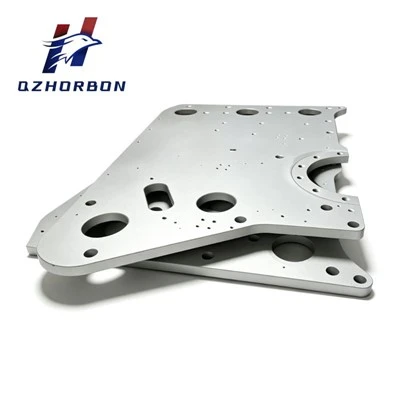
I see it every week: a customer calls in panicking because their crusher died mid-shift, and when we pull the side plate, there’s a crack running along the edge where the mounting bolts go, or the surface has worn down way faster than it should. A lot of younger operations or maintenance teams might write it off as “normal wear and tear,” but that’s a mistake. The truth is, a lot of those failures are avoidable, and they tie directly to defects in the manufacturing process.
Let’s break down the most common ones I see, and what I’ve learned over the years that causes each.
First up, shrinkage porosity. This is probably the number one culprit for hidden defects. For anyone not deep in foundry talk, shrinkage porosity is basically tiny gaps or holes that form inside the metal when it cools too fast. When you pour molten steel (or whatever alloy we use for side plates—usually high manganese or chrome-moly, right?) into a mold, the thick sections cool slower than the thin ones. That means the thick areas don’t get enough molten metal to fill in the spaces as they solidify, leaving those little voids. The worst part? These aren’t visible on the surface at first. You might inspect a side plate right out of the foundry, wipe it down, and think it’s perfect, but those voids sit right where the mounting bolts clamp it to the crusher frame, or where the liner plates press against it. Add vibration from the crusher running 12 hours a day, and those tiny gaps turn into cracks faster than you can say “production loss.”
I had a customer last year who bought a cheap side plate from a no-name supplier, installed it, and it cracked in three weeks. When we took it back to our lab and ran a dye penetrant test (that’s the trick where you spray a colored liquid on the surface, wipe it off, and the seepage shows hidden cracks), we found shrinkage porosity all along the bolt holes. The supplier had cut corners on the mold design to save money, so they didn’t add feeders—those little reservoirs of molten metal you’re supposed to put at the thick sections to keep feeding the metal as it cools. Shrinkage porosity doesn’t just cause cracks, either. If the voids are near the surface, they can create weak spots that erode way faster when the crusher is pushing rock or recycled concrete through it.
Next on the list: incomplete fusion defects. This one’s super common in the welding or bonding steps, especially if the side plate has a hardfacing layer (which almost all side plates do, to resist wear). Hardfacing is that extra layer of tough alloy we weld on the working surface to make the plate last longer, right? But if the welding team doesn’t get the heat just right, or doesn’t clean the surface properly before welding, the hardfacing layer doesn’t fuse all the way to the base metal. It might look solid when it leaves the shop, but after a few days of the crusher running, that top layer starts peeling off. Suddenly you’re dealing with not just a worn side plate, but chunks of hardfacing breaking off and getting mixed in with your finished product—hell of a mess for a recycling plant that’s sorting concrete and metal, or a quarry that sells aggregate.
I’ve seen this happen a lot with suppliers that rush through the hardfacing process. Some will skip the pre-weld cleaning, leaving grease, rust, or even just loose metal shavings on the surface, so the weld can’t properly bond. Others use too little amperage, so the heat doesn’t penetrate deep enough. Incomplete fusion might not cause a sudden crack, but it leads to uneven wear, which throws the whole crusher’s alignment off. When one side plate wears down faster than the other, the eccentric shaft has to work harder, and that leads to more stress on other parts—chain reaction that costs way more than buying a quality side plate in the first place.
Then there’s dimensional inaccuracy. This might sound small, but trust me, it’s a big one. Side plates have to fit exactly into the crusher’s frame, right? The bolt holes have to line up perfectly, the edges have to match the contour of the crushing chamber, and the thickness has to be within a millimeters of the spec. If a side plate is even 2 mm too thin in a critical spot, that’s a weak point waiting to bend or crack. If the bolt holes are off by a few degrees, the bolts won’t clamp the plate tight, so it starts shifting around. Every time that plate shifts, it rubs against the other components, creates extra friction, and wears out faster.
A lot of cheaper suppliers use old, worn CNC machines to machine their side plates, or they skip the final inspection step entirely. I had a customer once who tried to save $200 on a side plate, and when they went to install it, the bolt holes were 3 mm off center. They had to re-drill the holes on-site mid-shift, which took two hours, and in that time, they lost 8 tons of aggregate production. That $200 “savings” ended up costing them over $2,000 in lost revenue and labor. Dimensional accuracy isn’t just about fitting—it’s about the whole crusher running smoothly.
Another common defect: hot tearing. This is similar to shrinkage, but it happens when the metal is still semi-solid, cooling too fast and pulling apart at the grain boundaries. Hot tears usually show up as jagged cracks, often around the edges of the mold or where the metal meets a core (the part that makes the hollow sections of the side plate). The difference between hot tearing and shrinkage porosity is that hot tears are usually visible right away, but they’re often missed in a quick visual inspection because they’re thin and blend in with the metal’s grain structure.
Hot tearing is almost always a mold or cooling issue. If the mold doesn’t have enough of a taper to let the metal shrink as it cools, or if the cooling channels are uneven, the metal can’t contract evenly, leading to those tears. I used to see a lot of hot tearing in the side plates we supplied back when we were using sand molds instead of our current investment casting process. Sand molds are cheaper, but they can’t handle the uneven cooling as well, so hot tears were a regular problem. Once we switched to precision metal molds, that defect dropped by like 90%.
Wait, let’s not forget surface defects that might seem cosmetic at first, but aren’t. Things like slag inclusions—little bits of burnt flux or metal that get trapped in the surface of the side plate when it’s poured. These are like tiny hard spots, right? When the crusher is pushing rock against the side plate, those inclusions don’t wear the same as the surrounding metal, so they create uneven indentations or protrusions. That uneven surface makes the liner plates wear faster, because they’re rubbing against an uneven surface, and it also creates more stress points that can lead to cracks. Slag inclusions are usually from not properly skimming the molten metal before pouring, or from dirty molds, so they’re totally avoidable if you take the time to prep correctly.
And honestly? A lot of these defects are amplified by the fact that people treat side plates as a “disposable” part. They don’t inspect them on delivery, they just bolt them on and hope for the best. But I always tell my customers: you wouldn’t skip inspecting a new jaw crusher, so why skip inspecting a side plate? A 10-minute check for cracks or holes when you receive the part can save you hours of downtime later.
Now, let’s talk about why these defects end up in parts that are sold to operations like yours. I’ve seen too many suppliers cut corners on materials, skip quality control steps, use outdated equipment, or even use recycled metal that has impurities in it. Impure metal (like extra carbon or sulfur) is way more prone to shrinkage, hot tearing, and incomplete fusion. A lot of cheap side plates use 13% manganese steel that’s too low in carbon, which makes it softer and more likely to deform or crack. We use a 18% manganese alloy with controlled carbon levels for our side plates, specifically formulated to resist both wear and impact, and that’s a big part of why our parts last 2x as long as the ones from low-end suppliers.
I get it, cost is a big factor when you’re managing a budget. But I’ve seen time and time again that the “cheaper” side plate ends up being the more expensive one in the long run. The downtime, the extra labor, the replacement parts for other components that wear out because of a bad side plate—add it all up, and you’ll spend way more than you would have on a quality part from the start.
If you’re dealing with a side plate that’s failing prematurely, or you’re tired of dealing with parts that leave you stranded mid-shift, give us a shout. We don’t cut corners on quality—every side plate we supply gets a full dye penetrant test, dimensional check, and hardness test before it leaves our shop, so you know it’s going to hold up to your toughest jobs. No hidden defects, no surprise cracks, just parts that work when you need them to.
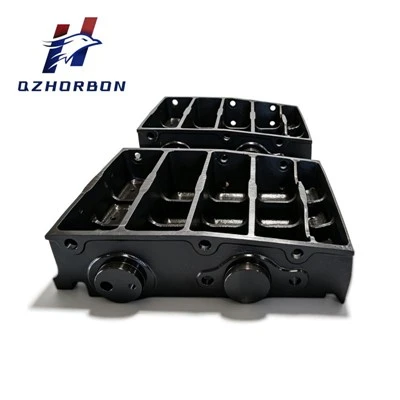
Feel free to reach out to us to talk about your specific crusher model, what materials you’re processing, and how we can customize a side plate that fits your needs. Whether you’re a small quarry or a large recycling operation, we’ve got the expertise to get you the right part at a fair price.
Crusher Counterweights References:
- NPTEL. (2021). Casting Defects and Remedies. Indian Institute of Technology Kharagpur.
- ASM International. (2019). Metals Handbook: Volume 15: Casting. ASM International.
- quarry – crusher maintenance manual. (2020). Global Mining Press.
Quzhou Horbon Mining Parts Co., Ltd.
Quzhou Horbon Mining Parts Co., Ltd. is one of the most professional crusher side plate manufacturers and suppliers in China, featured by high quality customized service and OEM service. Please rest assured to buy premium crusher side plate at competitive price from our factory. Contact us for pricelist.
Address: No.8 Nanshan Road, Qujiang District, Quzhou City, Zhejiang Province, China
E-mail: horbonmining@gmail.com
WebSite: https://www.horbonmachinery.com/
