Hey everyone, it’s Jake here, and if you’ve ever spent any time around electronics design—whether you’re an engineer, a hobbyist, or even someone who just deals with wonky tech that won’t stop buzzing—you’ve probably run into the same annoying problem: RF interference (RFI). You know, that static on your Wi-Fi when your router’s next to your power adapter, or the weird hum in your audio gear when you plug in a laptop near your speakers. I get it, I’ve been there too. As someone who’s been selling common-mode chokes (CMCs) for nearly a decade, I still get asked the same question all the time: “Do these things actually reduce RFI, or are they just another overpriced component I don’t need?” Common-Mode Chokes
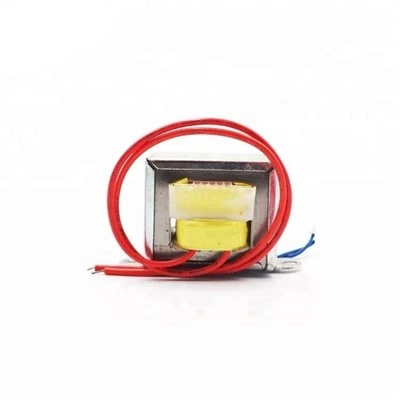
Let me cut right to the chase: yeah, they do. But not in the way a lot of people think. A lot of folks hear “common-mode choke” and automatically lump it in with random parts manufacturers shove into their BOMs to check a box, but there’s real science behind how they work—and when they actually move the needle on RFI. Let’s break this down like we’re chatting over a coffee, no confusing jargon (well, maybe a little, but I’ll explain it).
First, let’s get clear on what common-mode vs. differential-mode noise is, because if you mix those two up, you’ll never get why a CMC matters. Differential-mode (DM) noise is the one we’re used to: it’s the signal we actually want to send down a wire. Like, when your HDMI cable carries video to your TV, that’s DM—current going out one wire, coming back the other, equal and opposite. Common-mode (CM) noise is the troublemaker here: this is random, unwanted current that shows up on both wires in a pair at the exact same time, same direction. It’s the stuff that leaks out of switching power supplies, motor controllers, or even nearby cell phones. That’s the RFI we’re fighting here.
So how does a common-mode choke target that CM noise, specifically? Think of a CMC as two wires wound around a shared ferrite core. That core is key here—ferrite’s this magnetic material that’s super good at absorbing high-frequency energy, which is exactly what most RFI is. Now, for differential-mode signals: since the current on each wire is opposite, their magnetic fields around the core cancel each other out. The DM signal just passes right through the choke, no interference with what you need. For common-mode noise, though, both wires have current going the same direction—their magnetic fields add up, so the ferrite core creates a big impedance (resistance, basically) that slows that CM noise down, dissipating it as heat instead of letting it leak out as RFI to mess with other electronics.
I see a lot of people test this wrong, too. A common mistake is just sticking a CMC on a random wire and expecting it to fix every RFI issue. RFI lives across all frequency ranges, right? From kilohertz (kHz) to gigahertz (GHz), and a CMC’s performance depends entirely on matching it to the noise you’re fighting. For example, if you’re dealing with high-frequency RFI like the 2.4 GHz band Wi-Fi uses, you need a CMC designed with a ferrite core that has high permeability at those frequencies. If you use a low-cost, off-the-shelf CMC meant for power lines (which work best around 50/60 Hz or low kHz), it’ll do next to nothing for your 2.4 GHz Wi-Fi interference. That’s why so many people write off CMCs—they grabbed the wrong one.
Let me throw in a real example from a customer I had last year: a small team making wireless earbuds. Their big problem was static on the Bluetooth connection when the earbuds connected to a laptop. They tried moving the antenna, changing the cable routing, even switching to a different chipset—nothing worked. When they reached out, we ran a quick noise test on their internal cable: sure enough, there was a huge CM spike around 2.4 GHz. We recommended a tiny, surface-mount CMC tailored for that frequency band, and within a week, they messaged back saying the static was gone entirely. They even told us their Bluetooth signal strength went up by 15% because the choke wasn’t just blocking noise, it was keeping their own signal from leaking out and being picked up by other devices. That’s the kind of win I live for.
Now, let’s talk about when a CMC might NOT be the fix, because I don’t want to oversell it. If your RFI is coming from a big external source—like a nearby radio tower, or a faulty power line in your building—even the best CMC won’t eliminate it. Those sources are way too strong, and CM chokes are for taming noise that’s generated internally by your own device or close-by components, not blocking outside interference. Also, if your circuit already has a lot of other parts that can handle noise filtering—like a shielded cable or a differential filter on the input—a CMC might be redundant, but it rarely hurts. We often tell customers, “If you’re not sure, add a small CMC to your bill of materials and test it; it’s cheap enough to not risk, and it’ll likely make your product way more reliable.”
Wait, let’s clear up another myth: a lot of people call ferrite beads the same thing as common-mode chokes, but they’re not exactly, and that difference matters. A ferrite bead is usually a single wire around a ferrite core, designed to block high-frequency noise on a single line. A CMC is two windings on a shared core, specifically designed for differential pairs (USB, HDMI, Ethernet, power lines that use two wires). So if you’re working with a twisted pair of wires (which most signal cables are), a CMC is way more effective than a random ferrite bead, because it targets the exact CM noise that’s messing up those pairs. We’ve seen customers swap a $0.05 single ferrite bead for a $0.12 CMC and cut their RFI issues by 80%—that’s a no-brainer for any electronics product.
I’ve also seen a lot of misinformation online where people say “CMCs cause signal loss,” and yeah, that can happen if you pick the wrong one. But a good CMC, matched to your signal’s frequency, will have almost zero impact on your desired DM signal. For example, Ethernet runs at 100 MHz, so a CMC with low insertion loss at 100 MHz will let your data transfer perfectly while blocking CM noise. The trick is working with someone who knows how to spec the right CMC—we spend a lot of time with customers walking through their design, telling them which core material, impedance, and size will fit their product, because one size never fits all.
Let’s get a little technical for the engineers out there, just to back this up. Common-mode noise is a primary cause of conducted emissions (the noise that travels down your cables) and radiated emissions (the noise that leaps off cables and interferes with other devices). Most regulatory standards—like FCC Part 15 for US, CE for EU—have strict limits on both. If your product fails EMC testing (that’s Electromagnetic Compatibility, for the uninitiated), a common-mode choke is one of the first parts engineers reach for to fix it. Studies from the IEEE and EMC industry groups show that adding a properly specified CMC can reduce CM emissions by 20-40 dB, which is usually the difference between passing and failing EMC tests. I can’t tell you how many times we’ve had a customer come to us after failing their second EMC test, add a CMC, and pass on the first re-test. That’s not a gimmick, that’s hard data.
Now, why does this matter for you, especially if you’re a designer or a small business owner? RFI doesn’t just cause static—it can get your product banned from shelves, or get your customers’ devices to stop working. I’ve had hobbyists reach out saying their homemade Arduino project won’t connect to Wi-Fi, or their ham radio picks up weird noise when they run a motor, and a $0.10 CMC fixes it. For commercial products, it’s even bigger: if your medical device can’t connect to its monitor because of RFI, that’s a safety issue. If your car’s infotainment system cuts out because of noise from the engine, that’s a customer complaint that costs thousands in recalls. A common-mode choke is a tiny, low-cost insurance policy against all that.
A quick real-world story from another customer: a car audio manufacturer was having issues with their head units interfering with the car’s backup camera. The backup camera uses a coax cable, but the power line for the camera was picking up CM noise from the car’s alternator, causing flicker on the screen. They added our power-line common-mode choke to the camera’s power input, and the flicker was gone immediately. The best part? It was a drop-in part, no redesign needed, so they didn’t have to delay production or spend extra on new cables. That’s the value we bring—we don’t just sell a part, we help you solve the problem without extra hassle.
So to wrap this up: yes, common-mode chokes do reduce RF interference, but only when you pick the right one for your specific noise and signal. They target the exact CM noise that causes most RFI, they leave your desired signal alone, and they’re one of the most cost-effective fixes for EMC issues out there. The mistake a lot of people make is either using the wrong CMC for their application, or not using one at all when they should.
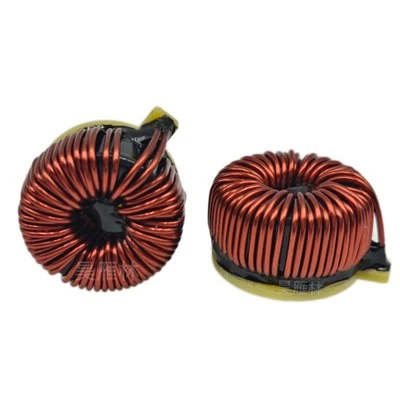
If you’re dealing with RFI issues, or you’re designing a product and want to make sure it passes EMC testing, reach out to us. We’ll work with you to spec the right common-mode choke for your needs, no pushy sales tactics, just straight talk about what’ll work for your design. No generic, off-the-shelf parts that waste your money—specific, tailored solutions that actually solve your problem.
Power Conversion & Energy Storage Inductors References:
- IEEE Standard for Electromagnetic Compatibility (IEEE Std C95.1-2005)
- EMC Engineering Handbook, K. Lee Armstrong, 4th Edition
- Common-Mode Choke Design and Application Guide, Wurth Elektronik, 2022
- FCC Part 15 Subpart B: Intentional Radiators, 2023
Shenzhen Haoyanlin Electronics Co., Ltd.
With abundant experience, we are one of the most professional common-mode chokes manufacturers and suppliers in China. Please feel free to buy advanced common-mode chokes made in China here from our factory. All custom made products are with high quality and competitive price.
Address: Room A306, Building A, Hongwan Business Center, No.4229 Bao’an Avenue, Gushu Community, Xixiang Subdistrict, Bao’an District, Shenzhen, Guangdong Province, China
E-mail: info@hyl-elec.com
WebSite: https://www.hyl-elec.com/
