If you’ve ever worked on a boat, a dockside workshop, or a coastal construction project, you’ve probably looked at your building wire stock and thought, “Wait—can I just use this here?” It’s a question I get at least 5 times a week as a building wire supplier, and it’s not a simple yes or no. Let’s break this down like we would with a customer standing at my warehouse counter, because the truth is, it’s way more nuanced than the quick Google answer. Building Wire
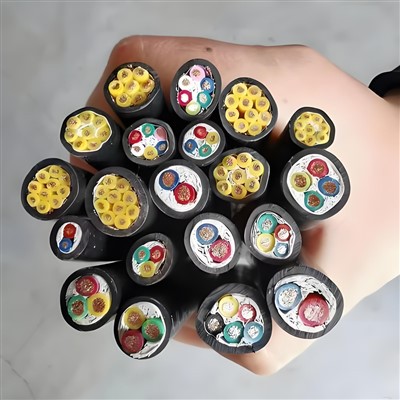
First, let’s get the basics straight: building wire (the stuff we all keep on hand for homes, offices, and regular land buildings) is made for a totally different set of conditions than marine spaces. On land, you’re dealing with stable temperatures, dry air (for the most part), no constant moisture, and way less corrosion risk. Marine environments? That’s a whole other ballgame. Saltwater, high humidity, constant temperature swings, even UV exposure if it’s going on deck—all of that eats through materials over time, especially if they’re not rated for it.
I’ve seen customers try to cut corners here before. A few years back, a guy brought in a spool of standard NM cable (Romex, for those in the US) because it was cheap and he thought it’d work for his small fishing boat’s cabin wiring. Within 6 months, the insulation on the conductors started peeling, and the wires corroded so bad the whole system shorted out. He came back upset, and I didn’t blame him—he just didn’t know the difference. Building wire isn’t designed to stand up to salt’s corrosive nature, not to mention being splashed with water daily.
Now, let’s talk about the two big things that make building wire and marine wire different: insulation and jacket materials. Standard building wire uses insulation like PVC (polyvinyl chloride) for most indoor applications, or a tougher PVC/nylon blend for outdoor land use. But PVC, while durable on land, breaks down fast in saltwater and constant high humidity. Marine-grade wire uses insulation and jackets like cross-linked polyethylene (XLPE) or chlorosulfonated polyethylene (CSPE)—think of those as the tough, weatherproof versions. They resist corrosion, repel moisture, and don’t degrade when exposed to salt or UV rays. That’s a non-negotiable for any marine space, even if it’s just a dock light that gets splashed every high tide.
Another big one: conductor stranding. Building wire often uses solid conductors for low-voltage land runs, but marine environments need stranded conductors. Why? Because solid wire is rigid—if a boat rocks, or a dock shifts, that solid wire will snap at the terminals eventually. Stranded wire bends and moves with the environment, so it holds up way better. I’ve had customers argue with me that solid is fine, but I remind them: a boat is never sitting still, and a dock’s posts shift with the tides. Stranded = less breakage, period.
Wait, but hold on—there’s a tiny exception. I once had a customer who needed to run a small 12V system inside a boat’s enclosed cabin, where it was completely dry, no splashes, no salt exposure. He used our standard THHN building wire, and it’s been working for 4 years no issues. That’s the only case I’ll greenlight building wire in a marine space: if it’s completely enclosed, never exposed to moisture, salt, or temperature extremes. But that’s a super specific scenario, and most people don’t realize how quickly even a small leak on a boat can turn into a problem. One tiny drip on standard building wire, and that insulation starts to degrade.
Let’s also talk about code stuff, because no one wants a marine electrical system that’s not up to code. The National Electrical Code (NEC) has specific rules for marine environments, and they explicitly say that standard building wire (NM, Romex, even THHN unrated for marine) is not allowed in areas exposed to water, salt, or weather. I’m not here to sell you marine wire just for the sake of it—if you can safely use building wire, I’ll tell you. But 9 times out of 10, marine spaces need the rated stuff.
I get it, though—marine wire is more expensive than standard building wire. That’s why I know some guys try to make building wire work, and honestly, if you’re planning a short-term project, or an enclosed, dry area (like a boat’s interior cabinet with no moisture risk), it might be okay. But I’ve seen too many people end up re-wiring a boat twice because they cut costs on the first run, and that ends up being way more expensive in the long run.
Let me give you a real example from last month. A customer came in wanting 500 feet of building wire for a new dockside pump house. Wait, a pump house—there’s standing water near it, humidity is 90% year-round, and it’s within 50 feet of the bay. I told him straight up: standard building wire would not hold up here. He pushed back, said he’d used the same stuff for a shed 2 miles inland and it worked fine. So I showed him a side-by-side: our marine wire jacket is thick, gray, and looks tough; the building wire’s jacket is thinner, more flexible, and would turn brittle in salt air in a year. He went with the marine wire, and a week later texted me to say the installer noticed the difference right away—marine wire was way easier to pull through the conduit without tearing, too. That’s another thing: marine wire’s jacket is often more tear-resistant, so installing it is less of a hassle.
Another point: copper vs aluminum conductors in marine use. Most building wire uses copper, which is great, but make sure the marine wire you’re getting is tinned copper. Tinned copper has a thin layer of tin on it, which resists salt corrosion way better than bare copper. I’ve had a customer who used bare copper marine wire on a jet ski lift, and within a year, the terminals were green with corrosion. Tinned is a must for any marine conductor, even if the wire itself is otherwise marine-rated.
So, to sum up: Can you use building wire in a marine environment? Only if it’s completely enclosed, 100% free of moisture, salt, and temperature swings, and even then, it’s a risk. For any area that sees even a little salt, splashes, or humidity—stick to marine-grade wire. It costs a bit more upfront, but it saves you from re-wiring, short circuits, and even safety hazards (bad wiring can cause fires, which are a real risk on boats and docks).
At the end of the day, I’m just a building wire supplier who’s been in this game for a long time, and I want my customers to make the right call. If you’re not sure whether you need building wire or marine wire for your project—whether it’s a boat, a dock, a coastal building, whatever—hit me up. I can help you figure out exactly what you need, no hard sells, just honest advice. Don’t risk your project (or your safety) cutting corners on wiring.
Cable References: 1. National Electrical Code (NEC) Article 555: Marine Electrical Installations. 2. Underwriters Laboratories (UL) Standard 83: Wire and Cables for Marine Use. 3. International Association of Electrical Inspectors (IAEI) Marine Wiring Guidelines.
Hebei Liangyu Cable Co., Ltd.
We’re well-known as one of the leading building wire manufacturers and suppliers in China, specialized in providing high quality customized service. We warmly welcome you to buy durable building wire made in China here and get pricelist from our factory. For price consultation, contact us.
Address: Yanbai Industrial Zone, Jiajiakou Town, Ningjin County, Xingtai City, Hebei Province
E-mail: 18932990441@163.com
WebSite: https://www.liangyucable.com/
