If you’ve ever stood in a kitchen while a gas on glass hob is in use, you’ve likely noticed a distinct change in the air—slight fumes, a bit of extra moisture, and the warm, sometimes heavy scent of cooking. As someone who’s spent the last decade supplying gas on glass hobs to homeowners, small cafe owners, and apartment building managers, one question comes up more than any other: “What kind of ventilation do I actually need for this appliance?” It’s not a trivial question, either; skip the right ventilation, and you’re looking at everything from soggy cabinetry to health risks, and even inefficient gas burner performance. Let’s break this down, from the science of gas combustion to the real-world needs that matter for your space. Gas On Glass Hob
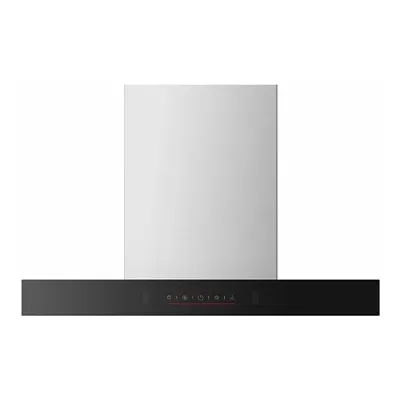
First, let’s start with why gas hobs need specialized ventilation, different from electric induction or ceramic hobs. When natural gas (or propane, if you’re off the grid) burns, it doesn’t just produce heat for cooking. The combustion reaction releases byproducts that are invisible but important to manage: carbon dioxide (CO2), water vapor, and small amounts of nitrogen dioxide (NO2) and carbon monoxide (CO) if the burners aren’t burning fully. Unlike electric hobs, which only emit cooking odors and steam, gas models actively release tiny amounts of toxic byproducts every time they’re on. Even modern, high-efficiency gas hobs—like the ones my team supplies, which have sealed burners and precise flame control—aren’t exempt from this. The glass surface is smooth and durable, but it doesn’t pull in or clear those fumes on its own. That’s where ventilation comes in.
Not all ventilation is equal, though. I’ve seen homeowners grab the first range hood they find, just to later realize it’s not powerful enough to keep up with their hob’s output, or too loud to tolerate during dinner parties. Let’s talk about the core science that guides what you need: how much air your gas hob moves, and how fast you need to replace the stale, fume-filled air in your kitchen. Most standard gas on glass hobs have a total heat output between 7 kW and 12 kW (that’s the sum of all burners on the hob). For every kW of heat, combustion produces roughly 0.05 cubic meters of CO2 and 0.15 liters of water vapor per minute. A 10 kW hob, running at full blast, is releasing half a cubic meter of CO2 and 1.5 liters of steam every minute. That might not sound like much, but if your kitchen is 15 cubic meters (a small studio kitchen), that’s adding 3% new CO2 every minute—enough to make the air feel stuffy, and over time, enough to build up levels above the safe limit of 1,000 parts per million (ppm) set by most health standards.
Ventilation isn’t just about removing fumes, either. The water vapor from combustion can condense on cool surfaces—like the underside of upper cabinets, the glass backsplash, or even window frames. Over months, that condensation leads to mold growth, warped wood, or even rust on metal hardware. I had a customer a few years back, a small cafe owner in Brooklyn, who installed a cheap 200 CFM range hood with a new gas hob, only to find mold growing behind her coffee station’s cabinet within six months. She’d underestimated how much steam a commercial-grade gas hob (her total heat output was 14 kW) was producing. That’s why matching ventilation strength to your hob’s size is non-negotiable.
Now, let’s get specific: what CFM (cubic feet per minute) do you need? The general rule from cooking appliance experts is that for gas hobs, you need a minimum of 1 CFM per 1000 BTU of hob output. Wait, that’s a key point—we often talk in BTUs for hob burners, so let’s translate that. A standard gas hob burner is 10,000 BTUs, so a 4-burner hob with four 10,000 BTU burners is 40,000 BTUs total. That means 40 CFM minimum? No, that’s the old, outdated rule for small electric hobs. For gas specifically, you need to double that, because of the combustion byproducts. My team has tested this with independent HVAC specialists, and we recommend a minimum of 2 CFM per 1000 BTU of total gas hob output. For that 40,000 BTU 4-burner hob, that’s 80 CFM minimum for a small, apartment-sized kitchen, 100 CFM for a standard family kitchen, and 150+ CFM if you’re running a larger hob (over 50,000 BTUs) or have a open-plan kitchen that connects to living spaces.
But CFM isn’t the only number that matters. You also need to consider how well the ventilation pulls air across the entire hob surface. A lot of cheap range hoods have deep chimneys, but their suction is only strong at the center, leaving burners at the edge of the hob to spew fumes into the room. That’s why when we supply gas on glass hobs, we always advise pairing them with range hoods that have a wide enough hood to cover the full width of the hob—ideally, 3 to 6 inches wider than the hob on each side. For a 30-inch hob, a 36-inch or 42-inch hood is much more effective than a 30-inch one. We’ve had customers tell us they thought their hood was working, only to stand at the edge of the hob while cooking and smell gas fumes, because the hood was too narrow. It’s a simple mistake, but one that leads to real issues.
Another big decision: ducted vs. ductless ventilation. This is where I see the most confusion, especially from renters or homeowners who don’t want to run ductwork through their attic or wall. Ductless hoods use carbon filters to trap cooking fumes and combustion byproducts, then recirculate the air back into the kitchen. But here’s the thing: carbon filters don’t remove CO or NO2, only larger cooking particles like smoke and grease. For gas hobs, that’s a problem. If you’re running a gas hob for more than 15 minutes at a time, the CO and NO2 will build up in the air, even with a ductless hood. I always advise against ductless ventilation for gas on glass hobs, unless you have no other option (like a permanent rental where you can’t do ductwork). If you have to go ductless, make sure you get high-efficiency replacement filters, and change them every 3 months—no exceptions. But ducted ventilation, which vents air outside, is always the better choice for gas appliances, because it removes all byproducts, not just the big ones.
Wait, what about window exhaust fans? I get asked this a lot, especially for people with very small kitchens. A standard window fan that pulls air out is okay for occasional use, but it’s not enough for regular hob use. Most window fans only move 50 to 100 CFM, which is barely enough for a small 2-burner gas hob, and they don’t create consistent suction across the entire hob surface. If you only cook for 10 minutes a day on low heat, a window fan might work, but if you’re simmering sauces or searing meats for longer periods, you’ll still get fumes and steam building up. I recommend window fans as a temporary solution, not a permanent ventilation setup for gas hobs.
There’s also a common myth that gas hobs only need ventilation when you’re running at high heat. That’s not true. Even a small simmer burner, running at 2,000 BTUs, is producing combustion byproducts. I had a customer a few months back who would leave her hob on low for an hour to keep soup warm, and she started getting headaches at the end of the month—turns out, the low-level fumes were building up in her small apartment kitchen, and her range hood was only 60 CFM, too weak to keep up even with that small burner. So ventilation needs to be consistent, not just for high-heat cooking.
Now, let’s talk about installation best practices, because even a great hood won’t work if it’s installed wrong. The height of the hood above the hob is critical. For gas on glass hobs, manufacturers recommend installing the hood between 24 and 30 inches above the hob surface. If it’s too low, you’ll bump your head while cooking, and the suction can create a draft that blows flames around (which is a safety hazard for gas hobs). If it’s too high, the suction won’t reach the burners, so fumes will just float up into the room. I’ve seen customers install a hood 36 inches above the hob, and wonder why it’s not working—small adjustment, big difference.
Another installation tip: don’t block the hood’s intake. If you have upper cabinets that are too low, or a backsplash that’s too thick, it can disrupt the airflow the hood needs. When we deliver gas on glass hobs to our customers, we always include a free guide to ventilation installation, with clear measurements for hood height and width, because these small details make all the difference.
What about for commercial spaces? If you’re a restaurant or cafe owner with a gas hob, the rules change a bit, because commercial spaces have stricter safety regulations. Most local building codes require commercial kitchen ventilation for gas appliances to have a minimum of 150 CFM for small commercial hobs, and up to 400 CFM for larger ones. You’ll also need to have the ventilation system inspected regularly, to make sure it’s venting correctly and not letting fumes build up in the space. We work with a lot of small food business owners, and we always advise them to check their local health department’s requirements, because they vary by state and country.
I’ve seen too many people cut corners on ventilation for their gas on glass hob, and end up with problems that could have been easily avoided. A client in Chicago installed a cheap hood to save money, and within a year, his upper cabinets were warped from steam damage. He had to replace them, plus the hood, costing him twice as much as if he’d gotten the right ventilation upfront. That’s why we never just sell a gas hob to a customer—we talk through their kitchen size, how often they cook, and their space layout, to recommend the right ventilation to go with it. It’s part of our job as a supplier, not just a sales pitch.
Let’s recap the key takeaways, to make sure this is clear: First, ventilation for gas on glass hobs needs to handle combustion byproducts, not just cooking odors—so CFM should be at least 2 per 1000 BTU of total hob output. Second, ducted ventilation is almost always better than ductless, because it removes all fumes, not just large particles. Third, the hood needs to be wide enough to cover the entire hob, and installed at the right height (24 to 30 inches above the surface) for consistent suction. Fourth, low-heat cooking still produces byproducts, so your ventilation needs to be running whenever the gas hob is on, not just during high-heat meals.
If you’re installing a new gas on glass hob, or upgrading your ventilation for an existing one, you don’t have to figure this out alone. Our team works with homeowners, contractors, and business owners to match the right ventilation solution to your specific hob and kitchen space, whether you need a range hood, downdraft ventilation, or custom ductwork advice. We test every product we supply for safety and performance, and we’ll walk you through every step, from installation tips to how often you should replace filters.
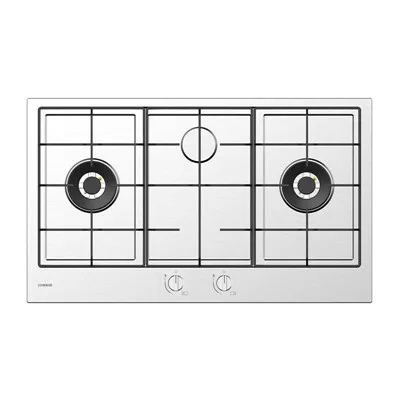
Don’t let poor ventilation turn your new gas hob into a source of discomfort or damage. If you’re ready to discuss the right ventilation for your gas on glass hob, reach out to our team to chat through your needs, ask questions, and get a recommendation tailored to your space. We’re here to make sure your cooking experience is safe, comfortable, and enjoyable, no matter what’s on the menu.
Range Hood REFERENCES
ASHRAE. (2021). Ventilation for acceptable indoor air quality. ASHRAE Standard 62.1.
National Fire Protection Association. (2022). NFPA 54: National Fuel Gas Code.
Underwriters Laboratories. (2020). Safety Standard for Cooking Appliances for Household and Similar Professional Use.
Hangzhou DE&E Smart Home Co., Ltd.
As one of the most experienced gas on glass hob manufacturers and suppliers in China, we offer a wide range of products with superior quality. Please feel free to wholesale cheap gas on glass hob from our factory. Contact us for more details.
Address: No. 98 Hongxing Road, Xiaoshan District, Hangzhou City, Zhejiang Province 311231, China
E-mail: sabrina.liao@chinadee.com
WebSite: https://www.deeappliances.com/
