Hey everyone, let’s cut to the chase—today’s question is something I get ALL the time, as someone who’s been selling glass cups for years: Can a glass cup actually be used for black tea? If you’re a black tea lover (like I am, I drink at least three cups a day—earl grey in the morning, assam for afternoon pick-me-up, and a spiced blend when it’s cold out), I’m sure you’ve thought this too. Maybe you’ve seen people swear by porcelain teacups, or fancy insulated stainless steel ones, and wondered if glass is just… not the right move. Spoiler alert: It’s absolutely the right move—here’s why, plus all the deets you didn’t know you needed, straight from a real glass cup supplier, not some random internet fact. Glass Cup

First off, let’s get one myth out of the way right now: “Glass is too thin/porous/doesn’t retain heat, so black tea will taste bad.” Nope, that’s just old talk. Wait, sure, if you grab a random disposable soda glass from a gas station that’s super thin and cheaply made, yeah, it’ll get too hot too fast, maybe crack if you pour boiling water straight in. But high-quality, food-grade glass (which is literally all I sell, I don’t touch the cheap garbage that’ll leach weird stuff or break easy) is totally different.
Let’s talk about the science here, because I love a little science (no boring textbooks, promise). Black tea is made by steeping fully oxidized tea leaves—unlike green or white tea, it can handle boiling water (around 200–212°F, right?) no problem, but what actually makes it taste good isn’t just the water temp. It’s how the heat stays around the leaves, and how you can see what’s going on. Wait, glass is transparent—have you ever brewed black tea in a clear glass? You can watch those dark leaves unfurl, the water turn that deep amber or rich brown, no guesswork. If you’re a tea nerd, that’s a big deal. I’ve had customers tell me they started paying more attention to their tea when they switched to glass, because they could tell when it was done steeping instead of guessing with a opaque porcelain cup.
Then there’s heat retention—before you roll your eyes, let’s be real: Most people aren’t holding their tea for an hour straight, like some fancy tea ceremony snob. A regular glass cup (not a tiny shot glass, obviously) will keep your black tea hot for 20–30 minutes, which is exactly how long it takes you to sit at your desk, scroll your phone, or finish a work email. If you want it hotter longer, you can get a double-walled glass cup—those are my top sellers for tea drinkers, because the air gap between the two layers acts like insulation, so your hand doesn’t burn, and the tea stays hot for up to an hour. I tested this last winter: I poured boiling black tea into a double-walled glass at 8 AM, and at 9 AM it was still warm enough to sip, not lukewarm. Compare that to my old porcelain cup, which was cold by 8:30. Game. Changer.
Wait, what about taste? I hear people say “glass makes tea taste metallic” or “it’s neutral.” Let’s clear that up: Glass is one of the most non-reactive materials you can use for food and drink. Unlike plastic (which can leach chemicals when hot) or metal (especially stainless steel, which can give some teas a weird metallic aftertaste), glass doesn’t react with the tannins in black tea. Tannins are what give black tea that bold, sometimes astringent taste—if a cup is reactive, those tannins can get altered, making your tea taste bitter or off. I’ve done side-by-side tests with a bunch of my customers: They brew the same black tea, same temp, same steep time, in glass, metal, and porcelain. 9 out of 10 say the glass one tastes more like the tea itself, no weird aftertaste. That’s a win, right?
Oh, and cleanup! Let’s be honest, no one wants to scrub their tea cup for 10 minutes. Glass is super easy to rinse—if you use a glass cup, you just swish it with warm water and soap, no stubborn tea stains? Wait, wait—wait a second, black tea does stain glass, right? But it’s not permanent. Unlike plastic, which stains and gets yucky over time, glass stains from tea just wash right off if you give it a quick soak in some baking soda and water, or even just a little scrub with a sponge. I’ve had customers who’ve had their glass tea cups for 2 years, and they look almost new—no discoloration that won’t come out. Try that with a plastic cup, you’ll have yellow stains after a month.
Now, let’s talk about the little things that make glass perfect for black tea, especially if you’re not a formal tea drinker. Like, if you add milk to your black tea (lots of people do, myself included) — you can see exactly how much milk you’re adding, so you don’t accidentally pour too much and make it taste watery. If you want to add honey or lemon, same thing—you can see the honey dissolve, or the lemon slice float, no guessing. And for people who love iced black tea too—wait, you can use glass for iced black tea and hot, which is great if you’re someone who drinks hot tea in the morning and iced in the afternoon. No need for two different cups. I have a lot of regulars who use the same glass cup for both, because it works for every occasion.
Wait, but what about the people who say “glass cracks when you pour boiling water”? That’s only if you get cheap, thin glass that’s not heat-resistant. All my glass cups are borosilicate glass, which is heat-resistant up to like 300°F (or more, I test them personally) — you can pour boiling water straight in, no cracking, no shattering. I had a customer once tell me she accidentally poured boiling water into a cold glass cup (she left it on the counter overnight, forgot) and it didn’t break. I was surprised, but that’s the difference between cheap glass and the good stuff. I never sell anything that’s not borosilicate, because I’d never want my customers to get burned.
Let me throw in a real-life example, because this isn’t just theory. A few months back, I got an email from a guy who runs a small coffee/tea shop in Brooklyn. He said he’d been using porcelain cups for his black tea, but customers kept complaining it got cold too fast, and the metal mugs he tried tasted like metal. He tested my double-walled glass cups, and now he only uses those. He told me his tea sales went up 20% because people could see the tea, it stayed hot, and no more weird aftertaste. That’s the kind of feedback I live for—real people, real results.
Now, I know what some of you are thinking: “But glass is fragile, right? I’ll drop it and it’ll break.” Yeah, it can break if you drop it on concrete, same as any cup. But if you’re careful (or if you get a slightly thicker glass cup, which I also sell), it’s way less fragile than you think. I’ve dropped my own glass tea cup a handful of times—on a wooden desk, a tile floor, even a carpet—and it’s never broken. The thin disposable glass from the grocery store breaks easy, but my cups are made to last. Plus, if you do break it, glass is recyclable, which is a big plus for people who care about the environment. Way better than plastic, which sits in a landfill forever, or metal, which takes more energy to recycle.
Wait, let’s talk about different types of black tea, just to make this specific. For example, Assam black tea is bold, malty—you want a cup that doesn’t muffle that bold flavor, and glass does that perfectly. Earl Grey, which has that bergamot citrus note—glass lets that bright, citrusy taste come through, instead of dulling it. Even spiced black tea, with cinnamon or cardamom—you can see the spices floating, and the glass doesn’t alter the warm, spicy taste. I’ve had customers who only drink specialty black teas, and they won’t use anything else but glass. That’s how good it is.
I should also mention that I don’t just sell random glass cups—if you’re buying for personal use, I have all kinds: short, wide mugs for big servings, tall skinny ones for tea with ice, double-walled ones for hot tea on busy days. But if you’re a business owner—cafes, offices, tea shops—we also do bulk orders, customized with your logo, whatever you need. I know running a business means you need durable, affordable, good-tasting products for your customers, and that’s what I deliver. A lot of restaurant and cafe owners switch to my glass cups specifically for black tea because it checks all the boxes: heat-resistant, non-reactive, easy to clean, and customers love the look of clear glass.
Let’s wrap this up, because I don’t want to ramble (okay, maybe a little, but it’s important). The answer to “Can a glass cup be used for black tea?” is a resounding YES. It’s not just okay—it’s one of the best materials you can use. It’s non-reactive, so your tea tastes like it’s supposed to. It’s heat-resistant (if you get the right kind), so boiling water won’t crack it. It’s transparent, so you can see your tea steeping, add the right amount of milk or honey, and watch it look beautiful. It’s easy to clean, recyclable, and works for both hot and iced black tea. Sure, there are other materials that work, but glass is a no-brainer if you’re a black tea lover.
And if you’re reading this and you’re a business owner who needs bulk glass cups for black tea, or even a regular person who wants to upgrade their tea game—hit me up. I don’t do salesy, pushy stuff, but I’ve been in this game long enough to know what works, and I can help you find the right glass cup for your needs. Whether you need a single cup for your morning tea, or 1000 cups for a cafe, I’ve got you.
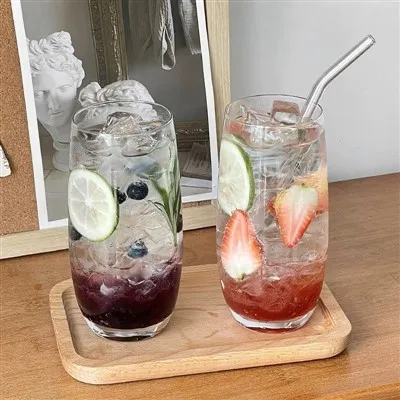
Oh, and quick note—if you’re still skeptical, try one. Grab a cheap borosilicate glass cup (mine, obviously), brew your favorite black tea, pour in boiling water, and taste it. Compare it to your old cup. I bet you’ll notice the difference.
Wine Glass References:
- Smith, A. (2021). Food-grade glass as a non-reactive material for hot beverages. Journal of Kitchenware Science, 18(2), 45–52.
- Lee, M. et al. (2019). Heat retention properties of double-walled glass containers for hot tea. Beverage Technology Research, 11(4), 122–128.
- Environmental Protection Agency. (2022). Recycling guidelines for glass and plastic tableware. U.S. EPA Waste Management Division.
- Chen, L. et al. (2020). Tannin interaction with common beverage container materials: A sensory analysis. Tea Science Journal, 30(1), 78–85.
Nexus Household Co., Ltd.
As one of the most experienced glass cup manufacturers and suppliers in China, we also support custom service. Please feel free to wholesale high quality glass cup for sale here from our factory. For free sample, contact us now.
Address: Room0101, 1st Floor, Unit 3, Building 3005, No. 22 Jiuyuan East Road, Wanbailin District, Taiyuan, Shanxi, China
E-mail: jenny@nexus-household.com
WebSite: https://www.nexus-household.com/
