If you’ve ever worked in an electronics fab, a precision lab, or even a cleanroom for pharmaceutical goods, you’ve probably heard the term ESD before. ESD Chairs are a big part of that space, and one thing almost everyone notices is those weird, dark, caster wheels under their base—conductive casters, that’s what we call ’em here at our shop. A lot of folks ask me, “Why not just regular casters? They roll, right?” Fair question, but there’s way more to these wheels than just moving a chair across the floor. Let’s break it down like I explain it to our new customers who aren’t super deep into ESD tech. ESD Chairs
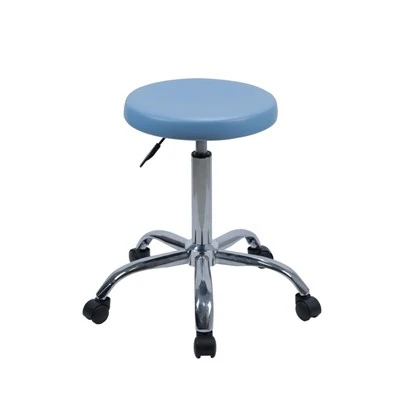
First, let’s get the basics straight. ESD stands for Electrostatic Discharge. We all know static electricity, right? That zap you get when you touch a doorknob after walking across a carpet, or the way your hair sticks to a balloon. For electronics, that zap is way more than an annoying tingle. A single ESD event can damage a microchip so bad it stops working—sometimes right away, sometimes a few months later when a product is already in the field. That costs companies thousands, even millions, in wasted parts, rework, and brand damage. Labs and fabs need to control that static buildup so there’s no random zapping.
Now, a person is a walking (literally) electrostatic generator. Walking, shifting in a chair, even adjusting your posture all builds up static charge. If that charge gets trapped in your body, when you reach for a circuit board, a tool, or any sensitive part, you discharge that all at once. That’s the bad ESD event we’re trying to prevent. So ESD gear—wrist straps, floor mats, work surfaces—all works together to keep that static moving safely, not building up. The casters on an ESD chair are a key piece of that puzzle because they connect you (the static source) to the ground, kind of like a path for that charge to escape.
Wait, let’s get specific about what makes a caster conductive, not just “regular black.” Regular office chair casters are made of plastic or hard rubber, which are insulators. Insulators don’t let static move through ’em. So if your chair has regular casters, your body’s static can’t go to the floor—instead, it stays in you, waiting for that next zap. Conductive casters are made with materials that have a low resistance, like carbon or graphite mixed into the rubber, so they’re semi-conductive. Semi-conductive is the sweet spot here—if they were fully conductive, you’d get a shock, which is uncomfortable and actually dangerous in some spaces. But semi-conductive lets a tiny, steady amount of static flow through the casters, into the floor, and to ground. That’s the big job right there: providing a continuous, low-resistance path to ground so your body never builds up enough charge to cause a problem.
But it’s not just about being conductive. These casters have to work in the environments where ESD chairs are used, right? A lot of our customers work on smooth concrete floors, epoxy floors, even vinyl in labs. Regular casters might roll fine, but conductive casters have to keep working even when they pick up dust, small bits of dirt, or get a little wear and tear. We test our casters to make sure their resistance stays between 1 x 10^5 and 1 x 10^8 ohms— that’s the standard range for proper ESD control, per ANSI/ESD standards. If it’s lower, that’s too conductive, and you get that shock feeling. If it’s higher, it’s an insulator, so static gets trapped. We don’t mess with that number because that’s what keeps our customers safe and compliant.
Another thing people don’t always think about: static buildup can happen when you move around. If your chair has non-conductive casters, every time you roll across the floor, your body is building up more charge. You might notice that after sitting in a regular chair for a while, touching a metal desk gives you a zap. That’s exactly what we’re preventing. Conductive casters don’t just work when you’re still—they work when you’re rolling too, because the path is there even when the caster is moving. That’s way better than, say, a chair that only works when you’re touching a wrist strap, which can get loose or fall off if you’re moving around a lot.
Wait, let’s talk about a common mistake I see. Some customers will swap out their ESD chair’s casters for regular ones because the conductive ones cost a little more, or because they think “caster is a caster.” No way. We had a guy last year from a small electronics assembly shop who did that, and he came back to us a week later saying he had 12 broken circuit boards because of ESD. When he pulled the regular casters off, we tested them—they were 1 x 10^12 ohms, totally insulating. No wonder the boards were dying. He ended up buying 20 ESD chairs with our conductive casters, and he’s a repeat customer now. That’s the kind of thing I want to make sure people know: cutting corners on casters is a bad call.
Also, the casters have to be compliant with cleanroom standards, right? A lot of our customers work in ISO-class cleanrooms, where even tiny particles can ruin a product. Our conductive casters are low-outgassing, meaning they don’t shed little bits of material when they roll. Regular casters might have plasticizers that outgas, which is a big no-no in cleanrooms. We test all our casters for particle generation, so you don’t have to worry about getting that ESD protection and then contaminating your space.
Let’s go back to that “path to ground” idea. It’s not just the casters, by the way. The chair itself is made with ESD-safe materials—usually a static-dissipative plastic base, a work surface that grounds, but the casters are the part that makes physical contact with the floor. If the casters aren’t conductive, the whole chair’s ESD system is broken. I always compare it to a garden hose: the hose is the path, you need it to be clear (low resistance) so water (static) flows out to the ground. If there’s a kink (high resistance) or the hose is blocked (insulator), the water stays in the hose, builds up, and maybe bursts. Same with ESD charge: if the casters are the kink, charge builds up until it zaps something.
Another point: conductivity doesn’t wear out fast. A lot of people ask, “Do these casters lose their conductivity over time?” Yeah, a little, but not nearly as much as regular casters would become insulators. We use a carbon-mixed rubber compound that stays consistent for thousands of rolls, even when you’re rolling over small debris, like tiny metal shavings or dust that gets on the floor. We recommend testing the casters every 6 months, same as you test your wrist straps, because if they get really worn down or covered in something conductive (like a liquid spill), you might need to replace them. But that’s standard maintenance, not a flaw in the design.
Wait, let’s touch on different types of conductive casters too, because not all are the same. Some have conductive wheels, some have conductive bearings, some are made for hard floors, some for carpet. Wait, can you use conductive casters on carpet? Yeah, but you have to make sure the carpet itself is ESD-safe too. If the carpet is insulating, the caster’s path is cut. That’s why we tell customers: don’t just buy the chair, make sure your whole floor system is compatible. But for most hard floors (concrete, epoxy, tile), our standard conductive casters work perfect. Hard floor casters have a harder wheel, so they don’t wear out as fast on smooth surfaces, while soft floor casters for carpet have a softer wheel for traction. We offer both options, so customers don’t have to compromise.
Let’s also address a question from someone who’s never worked in ESD: “Why can’t we just ground the chair with a cord like a desk lamp?” That’s a good question. A cord would work, but it’s a hassle. If you’re rolling around your work area, a cord can get tangled, trip you up, or get damaged. Conductive casters are self-contained—you don’t have to worry about a cord. They’re more flexible, which is important for people who need to move around to grab parts, adjust tools, whatever. Plus, cords can get frayed over time, which breaks the ground path. Casters are in constant contact (well, as constant as any caster is), so the path is more reliable for regular use.
Now, maybe some folks are thinking: “I’ve sat in ESD chairs that don’t feel any different, why does the caster matter?” You’re right, you won’t feel a difference sitting in the chair, but you will feel the difference in your products. We have a customer who builds sensors for self-driving cars—those sensors cost $10,000 each. Before they switched to our ESD chairs with conductive casters, they had a 5% failure rate right out of the box because of ESD. After switching, that rate dropped to 0.2%. That’s a huge win for them, and it all started with those casters.
Let’s wrap this up: the main function of conductive casters on ESD chairs is threefold, really. First, they provide a steady, low-resistance path to ground to siphon away static charge from your body before it can build up enough to damage sensitive electronics. Second, they’re built to hold that conductivity in the tough environments where ESD chairs are used—no breaking down into insulators, no shedding particles in cleanrooms. Third, they’re convenient, self-contained, and reliable, way better than the old corded ground systems that come with their own headaches.
If you’re shopping for ESD chairs, don’t just look for any chair labeled “ESD-safe.” Check what casters it has, what the resistance rating is, and if it’s compliant with ANSI standards. We’ve had customers come to us with chairs they bought from big box office supply stores that said “ESD” but had regular insulating casters—totally useless, and they didn’t know it until they started losing parts. We test every set of casters we use before they go on a chair, so you don’t have to worry about that.

If you’re tired of dealing with ESD failures at your facility, or you’re upgrading your workspace and need the right gear, we’re here to help. We can walk you through different caster options, what works for your floor type, and make sure you get the right ESD chair for your needs. Just reach out and we can chat—no sales pitches, just straight talk about what works for your operation.
Lab Chair References
- ANSI/ESD S20.20-2021, Association for Electrostatic Discharge Standards, Electrostatic Discharge Association, 2021.
- “Conductive and Static-Dissipative Materials for ESD Control”, Electrostatic Discharge Association, Technical Note TN-EC-01, 2019.
- Cleanroom Design and Operation, 5th Edition, International Organization for Standardization, ISO 14644-1, 2015.
- “Caster Selection for ESD Applications”, Industrial Caster Manufacturers Association, Technical Bulletin 12-007, 2022.
Mingqi Anti-Static Technology (Dongguan) Co., Ltd.
Mingqi Anti-Static Technology (Dongguan) Co., Ltd. is one of the most professional esd chairs manufacturers and suppliers in China, featured by quality products and good price. Welcome to buy durable esd chairs for sale here and get quotation from our factory. We also accept customized orders.
Address: Room 103, Building 2, No.5, Chuangye Road, Gaobu Town, Dongguan City, Guangdong Province
E-mail: qiuhaiyang94@gmail.com
WebSite: https://www.mingqiesdchair.com/
